As featured in Waterline Summer 2025
An Interview with Diane Lindsay
by Jordan Allsop
Tell me a bit about yourself & your career?
Hi, I’m Diane Lindsay and I’m a State registered principal clinical scientist, leading and overseeing the clinical research and development aspects of Legionella, Streptococcus pyogenes and vaccine preventable respiratory bacteria within the Scottish Microbiology Reference Laboratories, Glasgow.
I finished my PhD on whooping cough and started my career working in the NHS in 1991 – devising a urinary antigen Enzyme-Linked Immunosorbent Assay (ELISA) for Legionella. ELISA’s are commonly used laboratory tests, to detect and measure the presence of a specific substance, like antibodies, antigens, proteins, or hormones, in a sample. Back in those days, there was no ELISA test that you could simply buy ‘off the shelf’ to detect Legionella antigen in urine, so I devised an inhouse ELISA, which was easier than expected as that was a big part of my PhD training.

Diane & Jordan
I started on a three month contract nearly thirty five years ago and they still haven’t got rid of me!
My job role soon changed and covered all areas of Legionella at the time, including culture, urinary antigen, serology, and both water and human testing. There was only myself and one other person responsible for this at the time. It was then decided we were at critical mass and they were concerned as to what would happen if one of us became ill, moved, or retired. With this in mind, we merged with another reference lab that included vaccine preventable organisms: whooping cough, Haemophilus influenzae, Neisseria meningitidis and Streptococcus pneumoniae, and also started typing Streptococcus pyogenes or Group A Strep. I’ve gone from knowing a lot in one field, to having to be a generalist in a lot of different areas but it makes it more interesting. I have to say though, I’ll always love Legionella. It’s my favourite bug!
What initially sparked your interest in microbiology?
My parents would take me to the library every week and I would get books on hematology & biochemistry. I was such a nerd! I wasn’t the brightest at school and didn’t particularly excel academically, but I think if you try hard and put your mind to something, you can achieve anything. I had a younger sister who died of cancer when she was five years old, so I wanted to go into something where I could make a difference. I suppose we all think we can find a cure for cancer but not everyone can do that. I also had a fantastic biology science teacher, Mr Cameron, who encouraged me to do a Microbiology project in my final year. I think if you have a great teacher, they inspire you to go on and achieve greatness.
So, I think it was a combination of having caring parents, family trauma, a great teacher, and sheer hard work, that meant I found my path to Microbiology.
What does a typical day look like for a microbiologist?
Each day is different. My job isn’t so much hands on in the llab anymore, as I’m more desk based now. On a day to day I can be involved in going through the backlog of emails from over the weekend, I could be on an IMT (Incident Management Team) meeting about an outbreak; I’ll look at lab results and provide advice on how we manage the patient, which can involve looking at the background of the patient, for example their case history and symptoms. You can’t look at lab results in isolation, you need to look at the bigger picture. I will also phone out results, I do this to update clinicians and public health, especially if there is a Legionnaires’ Disease case, for example, so they can do enhanced surveillance. At the start of an outbreak, an IMT meeting is called and this involves multiple groups of people needed to manage the issue. I might also be writing guidance, scientific papers, analyzing data, and sequencing cluster reporting. There is also a lot of teaching, from undergraduate up to PhD level. Before becoming more desk based, a day to day would include: Devising new tests, setting up multiple assays, analyzing and reporting on these tests and phoning results to sending labs and clinicians.

Legionella urinary antigen ELISA
Are there any mentors or scientists that inflfluenced your approach to research Legionella longbeachae?
Dr Ron Fallon, who has a Legionella named after him called Legionella fallonii (that’s when you know you’ve made it!). He had a very inquisitive mind and brought Legionella testing to the UK. Another was my PhD supervisor, Professor Alistair Wardlaw. He would always ask me questions that I couldn’t answer, so I’d have to go and find out the answer, and he would then ask me something else I didn’t know. I found this a really great way of learning and thinking things through.
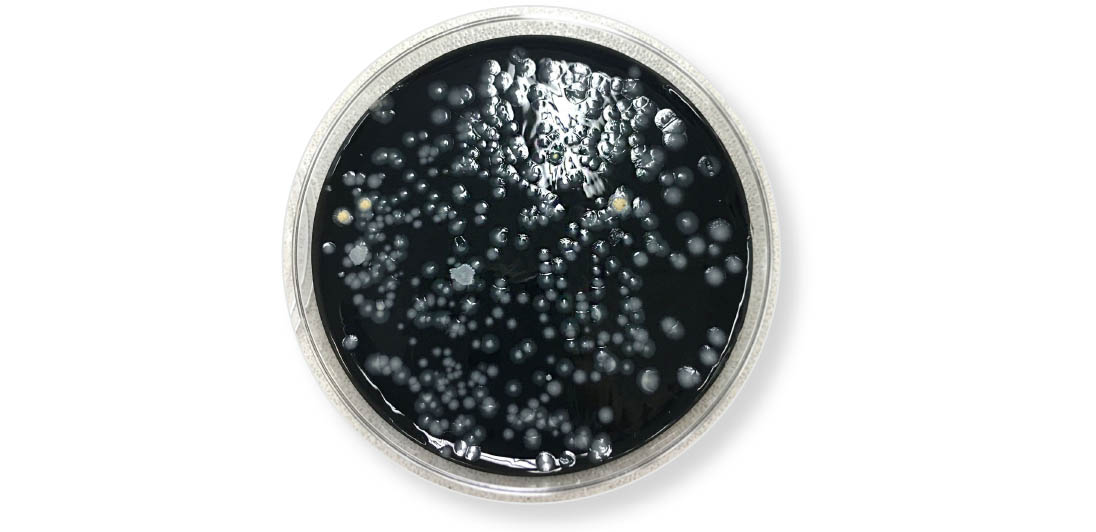
Mostly Legionella pneumophila from an acid treated water sample
What would you consider your most signifificant professional achievement?
• The research I have been involved in has been fascinating, and nothing beats the eureka moment when something works that has been eluding you for months. I have always tried to remain patient focused. At the end of the day, if you can diagnose someone quickly and they can receive the correct treatment, you could have saved a life or halted an outbreak that might have infected others.
• I am also proud of the scientific papers, especially the genomics ones which helped me meet and collaborate with a lot of really smart colleagues, some of which are now friends, so I feel lucky to have had that opportunity.
• Training the next generation has been a wonderful opportunity. I’ve had some really great experiences along the way and met some exceptionally bright and talented people. I think if you can reach the end of your career and you don’t have many enemies, then you’ve not done too bad. I’d like to think I get along with most people, and I feel we achieve so much more when we collaborate and work together to reach a common goal. We should all retire feeling like we have inspired others to continue our legacy.
• I made it to chair of the ESCMID (European Society of Clinical Microbiology and Infectious Diseases) study group for Legionella infections. It plays a crucial role in continuing education, research support, and networking for professionals in this area. It’s across Europe but we have had an increase in our membership by 400% from across the globe. I’ve also recently become an ESCMID Fellow, which is an honour.
Outside of work, do you have any hobbies or interests?
I have lots of hobbies and interests, but I’ll only mention a few:
• I sing in the community choir – I love it even though I know I’m not the best singer, but it doesn’t matter, because when we all sing together, we sound brilliant! My claim to fame is that I sang with Michelle McManus at a recent Christmas concert. For those of you that don’t know Michelle, she won the second series of Pop Idol in 2003 with ‘All this time’.
• I enjoy walking. I walk the legs off of my husband and any dogs that we occasionally look after.
• I’m in a creative writing group and I am currently trying to write a novel (though it is nowhere near finished), so it may be more than scientific papers to my name in the future!
• I practice mindfulness and have attended mindfulness courses in the past – they’re great for stress relief! I once signed up for a silent retreat (by accident) but I managed it – I said nothing for 2 days. Yes, 2 days! Not one word, but I have to say, I thoroughly enjoyed it.
• Lastly, I would like to grow my own vegetables. There are allotments near me and this nicely introduces the main topic of this interview – Legionella longbeachae.
About Legionella Longbeachae
I love talking about Legionella longbeachae, but usually when I start a conversation about this people say ‘here we go, Diane is talking about Legionella YAWNbeache again!’, but I actually find it really fascinating so I try and share my enthusiasm.
Legionella Longbeachae
INTERESTING FACTS:
• Legionella longbeachae was first discovered in Long Beach, California in 1980.
• Legionella longbeachae is often associated with compost or potting soil.
• Something I am excited to share is an ESCMID poster ‘Legionella longbeachae: an emerging pathogen in Northern Europe’ that was accepted for ECCMID global in Vienna this year (see page 27). It was a collaboration with ESGLI colleagues from Sweden, Norway, Finland, Denmark, and Scotland that have all seen increasing cases in 2024.
• Some studies suggest trees may be the source of Legionella longbeachae, as potting mixes often contain pine bark and sawdust. Weirdly, Bob Dylan wrote a song called ‘Legionnaires’ Disease’, and his lyrics are: ‘But whatever it was, it came out of the trees. Oh that legionnaires disease’ – which may be coincidental, but I think Bob was onto something even in 1981!
Can you brieflfly explain what Legionella Longbeachae is?
It is a Legionella species that was identified in 1980 not long after L. pneumophila Serogroup 1 after the Philadelphia outbreak at a Legionnaires’ convention in 1976. It’s very different from Legionella pneumophila.
Some key differences are:
Outside of work, do you have any hobbies or interests?
• It has a relatively large genome compared to other Legionella species.
• Legionella Longbeachae has a capsule, whereas L.pneumophila, or any other species that I am aware of don’t. The capsule may stop the bacteria from drying out in compost, and also makes it more difficult to destroy if it does get into the lungs.
• Legionella longbeachae does not possess a flagella (a tail), as it doesn’t have to move in water like L.pneumophila, which do have a flagella.
• It has ‘pili’, which is involved in chemotaxis, so it kind of shimmies a little bit to a food source or away from anything nasty, so it doesn’t move like other legionella through water. This makes it sound quite cute, but don’t be fooled, we’re still talking about an organism that can cause life threatening infections.
• It is mainly found in growing media (soils, compost, etc). People say they have isolated it from water, but I have never isolated it from water in my thirty five working years – I’ve only isolated it from compost, and in those instances sometimes in huge numbers per gram.
• Legionella longbeachae is distinct from L.pneumophila, but has just evolved and adapted to living in a different moist environment.
How does it affect the human body?
In the UK, Legionnaires’ disease is defined as a pneumonic illness with laboratory confirmation by urinary antigen, culture and/or PCR. Sometimes you can have it in other areas of the body that are not in the lungs. There have been cases of L. longbeachae infection of the skin where there has been a cut by a rose prick. There have also been cases of other Legionella species found in abscesses, joints, heart valves, and necrotic tissue. Legionellosis includes not just Legionnaires disease but also Pontiac fever, which is a milder form of infection and is more like a flu-like illness. No one is very sure what causes Pontiac fever, but it may be a sensitization of the respiratory mucosa with an endotoxin from the bacteria.
Food for thought – How does Legionella get into unusual places?
Sequencing has shown that we can identify the same isolate that hasn’t changed from the Philadelphia outbreak in 1976 in Australia 40 years later. Bacteria change and mutate through their life, so how did the exact same strain get there?
Some people think it’s up in the stratosphere, inside encysted amoeba in suspended animation and eventually comes back down to earth. Another theory could be that subclinical cases transport Legionella in faeces around the globe, or maybe our transport network moves it around in boats and aeroplanes that hold water.
TOP TIPS to reduce your risk of exposure:
• Opening bags of compost outside.
• Avoid creating an aerosol.
• Wash your hands after use.
• Don’t sniff your compost …. This happens quite often, believe it or not. Putting something that is microbial rich up to your nose might not be the best decision you’ll ever make!
• Do not store compost in a warm environment like a greenhouse or shed. Legionella like nothing better than a warm place to grow!
Our first case of Legionella longbeachae in Scotland was in 2004. The patient had travelled back from Australia, where they had been gardening, so we think it was a travel associated case. We started to see more cases from 2008 – 2012, when there were about eleven cases. However, late in the summer of 2013, we had seven cases within six weeks. All cases were culture positive for L. longbeachae. An investigation was started and we noticed people were storing compost in sheds, green houses, and even in their home – all places that are likely to get warm, and if the environment is warm, then bacteria are going to multiply. Opening bags of compost in enclosed spaces also means there is a much greater risk of exposure. I’ve always said, if you are opening a bag of compost, please open it outside, and always wash your hands after use.
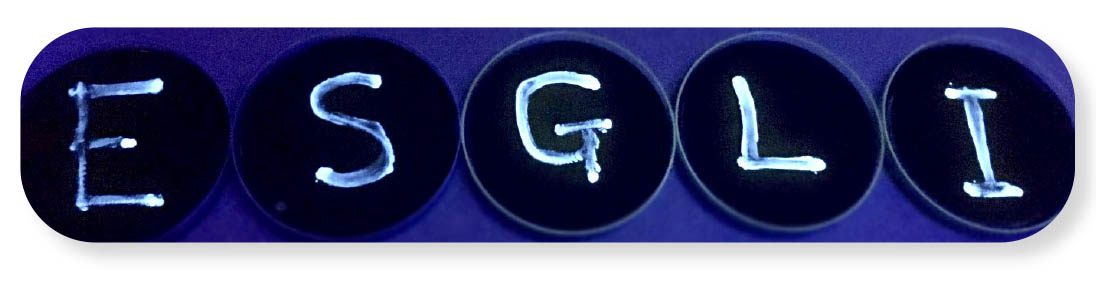
Blues white Legionella anisa spelling out ESGLI (European study group for Legionella infections)
The compost companies are very adverse to putting any kind of warnings on compost bags or labels. I once visited a compost factory and they advised that compost leaves the factory ‘Legionella free’ as it was PAS 100 treated. This is a pasteurization process, which means it is kept at 65 degrees centigrade for seven days to kill any enteric bacteria that would cause sickness or diarrhoea, but it would not necessarily kill Legionella because they are associated with amoebal protozoa. They can hide in encysted amoeba. You can heat these up to 65 degrees and they are not affected. The temperature then reduces, and the Legionella comes back out of the amoeba. The pasteurisation process may be good for enteric organisms, but not for Legionella.
Maybe Southern Europe do not see cases as it is so warm outside they don’t need greenhouses like we do in Northern Europe, so they are opening their compost outside, which could be a factor for reducing risk.
How do you identify Legionella longbeachae?
Usually by culture. Firstly, we get a respiratory sample, for example sputum from a patient. We then perform a PCR (Polymerase Chain Reaction) assay. The PCR detects Legionella species and Legionella pneumophila. If it is a pneumophila, it also reacts with a Legionella species target as after all, L. pneumophila is still a Legionella species. If the sample only reacts with Legionella species, not a pneumophila, we can say it is not a pneumophila. Next we would try to culture it and isolate the Legionella longbeachae. Our culture’s success rate is around 50%. The majority of Legionella species we see are L. longbeachae.
Have there been any signifificant outbreaks of Legionella Longbeachae in recent years?
There have been clusters. We have looked genomically at the patient and related compost isolates. We found multiple types in the compost which were very diverse and the patient isolates were one single type of L. longbeachae. Often, we didn’t identify the same type in the compost that the patient had been using, but we identified it in another compost that another patient had been using. Generally, if they are infected it is with only one type or clade.
We stopped looking to identify the source, this is because we had one patient where we took eighteen individual isolates from the compost that they were using and they all eighteen were different from the one that affected the patient. It is very difficult to link a patient to a compost unless you are very lucky.
There has been a Swedish ‘outbreak’ where they saw an increase in cases and trends during the spring and summer. This is more likely when the compost is in use, but they are not linked to a single Legionella longbeachae strain.
ENDING QUESTION
What advice would you give to someone considering being a microbiologist?
• 1) I would say it is really important to do the right course! Consider courses that will lead to a job and becoming registered. If you want to be a biomedical scientist, there are plenty of jobs in microbiology and biomedical science, so go and do an accredited course.
• 2) Clinical scientist training roles are as ‘rare as hens teeth’, as my granny would say, it’s very hard and competitive and you usually need a PhD, but there are some equivalence routes into clinical science for microbiologists.
• 3) Clinical is more research and development, which is really interesting because the biomedical scientist does more of the day to day testing, but the clinical scientist will devise tests that then go on to be used on a daily basis.
FUN QUESTIONS
If you were given £1,000,000 today, what’s the first thing you would do?
Retire! No, I would probably give it away. I wouldn’t want £1,000,000. I mean, I would keep some of it and have a few luxuries like travelling first class, but I would give the majority of it away.
What are the weirdest/funniest things that have happened to you on a trip?
There have been so many! I was away at a conference in Washington during my PhD and I visited Arlington National military cemetery. I was sitting down, listening to a service, and they started playing The Star-Spangled Banner – I didn’t recognise it so stayed seated. This army private came over, pointing a gun straight at my face and shouts ‘STAND UP missy, show some respect!’. I thought I was going to be killed! I laugh about it now, but at the time it was a scary moment.
Another memory was a vespa trip around Tuscany with a couple of friends. We had never driven a Vespa before and I knew things were not looking good when on the first lesson, I went the wrong way around a roundabout and one of my friends fell off her bike in the middle of a busy junction. We were then in an underground car park, and we had to try and get the Vespa up a very steep slope. I managed it, but neither of my friends did. I looked around, and one had managed to crash into the wall, and my other friend was embedded in a large shopping trolley! They were both just a bit bruised, but we were all hysterical and just glad to have survived!
If your life had a motto or tagline, what would it be?
Never say never! Things change and you need to learn to adapt… like Legionella longbeachae to a different environment. The first song lyric that came into my head when asked this question was ‘I get knocked down, but I get up again’ – Chumbawamba (1997 single) – Gotta love that song!
A note from Jordan Allsop:
As some of you are already aware, Diane is due to retire soon, which means the industry has lost another fantastic contributor and inflfluential person.
This reiterates the importance of knowledge sharing, whilst we have the opportunity!
Thank you to Diane for sharing just a short part of your wealth of knowledge with me. I thoroughly enjoyed the interview with you and had a lot of laughs in the process. I would like to wish you a very happy retirement.