As featured in Waterline Summer 2026
Apprenticeships
IDEAS TO IMPACT
Steven Van De Peer, Authorising Engineer Services Director & Principal Consultant, Tetra Consulting Ltd
Last year, Tetra Consulting embarked upon our first apprenticeship programme, starting small with just one apprentice and determined to get it right. We set about reviewing how apprenticeships work, we looked at what value they offer to both the business and the apprentice, and what the best application of an apprenticeship programme would look like for us.
Before we get into the detail on what we did and what the results have been thus far, it’s important to take a look at what apprenticeships are, what the value is, and how the water safety industry is engaging with them.
Apprenticeships in the UK have their roots in the Middle Ages, when formal agreements bound young people to skilled craftsmen to learn a trade through practical experience. The apprenticeship system remained important to workforce development for centuries but declined during the Industrial Revolution as factory-based labour reduced traditional craft training.
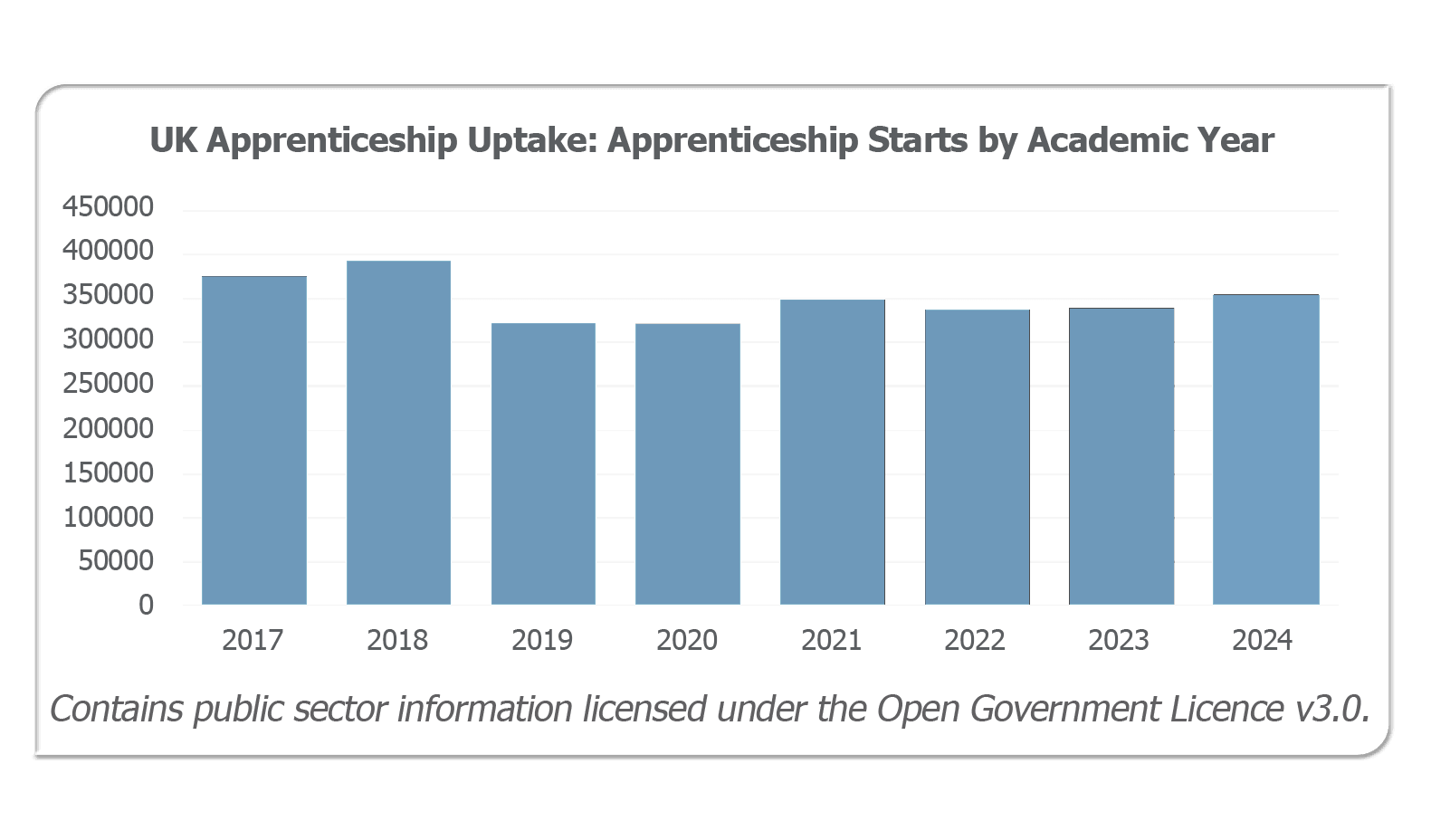
Since the 1990s, successive UK governments have revitalised apprenticeships as a core skills and employment policy, expanding them beyond manual trades into professional sectors and introducing standards, funding reforms, and the Apprenticeship Levy in 2017 to strengthen employer-led training.
The success of these schemes is up for debate, but nevertheless, they are available. In particular, the apprenticeship levy is a very valuable resource, however, it may be underutilised. Despite acute skills shortages in the UK, apprenticeship uptake isn’t what it could be.
The UK legionella control industry and wider water safety industry are starting to improve engagement with apprenticeship programmes, however, the uptake is slow and uneven. In our sector, there is still a huge reliance on “short course” delivery and a general reticence to invest deeply in employees to upskill them to the levels required.
As the acute skills shortage begins to bite, it becomes evident that mitigation for it will be a long road, rather than a quick win. The water safety sector has the opportunity to come forward and show the benefit of utilising apprenticeship programmes to create strong foundations of competence in a sector that has clear legal duties, but routes to demonstrating individual competence that aren’t always consistent or well understood.
There are key benefits and broad value to apprenticeship programmes, both for the organisation and the apprentice.
Key benefits include:
• Providing an alternative learning route for a young person, allowing them to earn money and learn at the same time, whilst providing them with key experience of the world of work and a technical discipline. After all, not everyone thrives in an academic setting.
• Being able to develop a young person into a highly competent individual, but crucially, to be able to have them operate in the precise way you want them to, without learning “bad habits”. If you can engrain a strong culture in a young person early on, it tends to stick.
• Learning passes both ways, if you can get the mentoring element correct, the apprentice can learn from their mentor(s), and the mentor(s) can also learn from the apprentice.
The broader value to apprenticeships can be commercial (the apprenticeship Levy) or it can be reputational. One value we’ve noticed is that each of our team members that have worked with our apprentice have really taken ownership of their learning and have engaged with trying to help them develop as much as possible. This is a cultural boost to an already close and strong team, providing personal and professional development to all involved.
Once we decided to engage with an apprenticeship programme, the first step for us was to find out as much as we could about:
• The apprenticeship levy
• The available courses and the content of each
• The available methods of delivery – day release / block release / distance learning etc
• The apprenticeship pathway – the steps that must be taken to complete the apprenticeship
We set about looking at course providers and settled on one that used a distance learning platform. For us, this was the ideal scenario as it meant we could employ an apprentice anywhere in the UK and they would be able to learn without having any issues with travelling to a specific college.
That may not be the best option for all businesses though, which is why the research element is critical.
The course we opted for was the level 3 water treatment technician apprenticeship, this had great value and flexibility in that it provides a strong foundation of core concepts and also provides 3 separate pathways:
• Risk assessor pathway
• Water treatment technician
• Water treatment equipment technician
Once all of the relevant agreements were in place with the provider, we set about looking at what we expected the outcome to be, and how exactly we intended to get there.
To support this, we put together our own apprenticeship pathway document that sat separate to the learning pathway within the apprenticeship course.
The apprenticeship pathway looked at, and decided upon, the following things:
• What will the apprentice be doing day to day? and how does that change over the course of the programme?
• What courses can we provide the apprentice with that are relevant, will further support their learning and crucially, when do we provide them so that they aren’t overbearing?
• At what point can the apprentice undertake independent work? what type of work they can undertake? and what do we need to support / verify that process.
• In line with their learning pathway, how will we support the completion of the apprenticeship by ensuring a body of work is created that can be readily demonstrated?
• How can we work with our industry partners to support us in developing our apprentice?
Once all of that was in place and agreed, we had to decide upon what is potentially the most important part, mentoring. How would we set this up? and how would we ensure as consistent an experience as possible?
We decided to make everyone in the team a mentor, with a lead mentor that takes full ownership of the apprentice’s day to day learning and development. A large part of being an apprentice is shadowing others, asking questions, and being challenged by those you are learning from.
By making everyone equally responsible, we have managed to provide a balanced experience, the lead mentor isn’t spending all day everyday with the apprentice, and the apprentice is gaining experience from multiple people with varying competency maps.
In this way, the lead mentor is able to focus the apprentice’s learning and provide overarching guidance to the varying methods and approaches that they have seen from the multiple mentors. This has provided our apprentice with the ability to make up their own mind on grey areas and justify their reasoning.
After only 6 – 7 months we have undertaken competency assessments with our apprentice and they have passed with flying colours. They are now undertaking independent work that is quality assured by other experienced consultants.
This experience at this stage is absolutely invaluable to our apprentice, who we believe will be a very competent consultant in due course.
The process of setting up an apprenticeship programme, even for just one apprentice, has been a little challenging, and it certainly took some time to get the right pieces into place. It has however, been extremely rewarding and has proven to be a success thus far in the way we have implemented it. We are now looking at expanding the programme.
I would recommend setting up apprenticeship programmes to anyone that has the inclination to do it, and I really believe that if we want to close the skills gap, and service an industry with competent people, apprenticeships are critical.
If nothing else, engaging early may separate you from your competitors, both in competency (longer term) and corporate social responsibility (shorter term).
In conclusion, to boost your business, strengthen the younger generation of UK workers, help mitigate the skills gap and drive forward a more competent sector workforce, heavily consider the apprenticeship route.
Buyer beware though, as with any system, the input directly influences the output, so the preparation work is absolutely critical to make it the most rewarding it can be for both the organisation and the apprentice(s).
The lessons we have already learned from the process are:
• Choose the apprenticeship standard and provider carefully, the style and logistics of the learning aspect have to be right for your organisation.
• Build mentoring into the programme from day one, the mentoring process is make or break.
• Link workplace experience to evidence, competence and end-point assessment. The body of work delivered for the end point assessment should be relevant, and the apprentice should be able to take full ownership of it.
• Do not allow independent work until competence has been assessed and quality assurance is in place. This protects the apprentice as well as the organisation and the clients that we may work for, it also allows for a staged learning experience, levelling up and stretching boundaries at key points.