As featured in Waterline Autumn 2024
AP’s, RP’s, governance structures and what you need to know
By Steven Van De Peer EngTech TMIET MWMSoc AMIHEEM, Head of Authorising Engineer Services and Principal Consultant | Tetra Consulting Ltd
In the facilities management (FM) industry, safety is paramount. FM teams are responsible for a huge range of technical disciplines, and these can often prove very dangerous to those operating them, or those that receive the end product if not managed in a competent and safe manner.
To assist with the assurance of the safe management of these disciplines/systems, industry guidance has long suggested the use of appointed persons within governance structures as a way of ensuring the right people are managing the systems with the right level of support.
All of that sounds great and makes a lot of logical sense, but there is plenty of ambiguity, especially for those appointed to roles relating to water safety. To understand the problems, we have to review the roles/structures set out by guidance.
Approved Code of Practice l8 (ACoP L8)
The ACoP highlights two roles:
The Dutyholder – The role of the Dutyholder, if well-defined and has a reasonable amount of information given within the ACoP relating to the duties expected (which all stem directly from legislation), can be clear. However, in the vast majority of cases, especially in large organisations, this individual has little operational impact on the water systems, and therefore little impact on the risk on a day to day basis.
The Responsible Person – ACoP L8 suggests the following in paragraph 51:
The dutyholder should specifically appoint a competent person or persons to take day-to-day responsibility for controlling any identified risk from legionella bacteria, known as the ‘responsible person’. It is important for the appointed responsible person to have sufficient authority, competence and knowledge of the installation to ensure that all operational procedures are carried out effectively and in a timely way.
The appointed person must be competent, but what will they actually undertake by way of their responsibilities? Paragraph 51 goes on to state:
The appointed responsible person should have a clear understanding of their role and the overall health and safety management structure and policy in the organisation. See Managing for health and safety at work for further guidance.
The ambiguity of the role of the Responsible Person is well known in the water hygiene industry, but not well publicised across the wider FM industry. Ultimately, what the responsibilities of the Responsible person, or persons, will be, are up to the organisation appointing them.
HTM 00
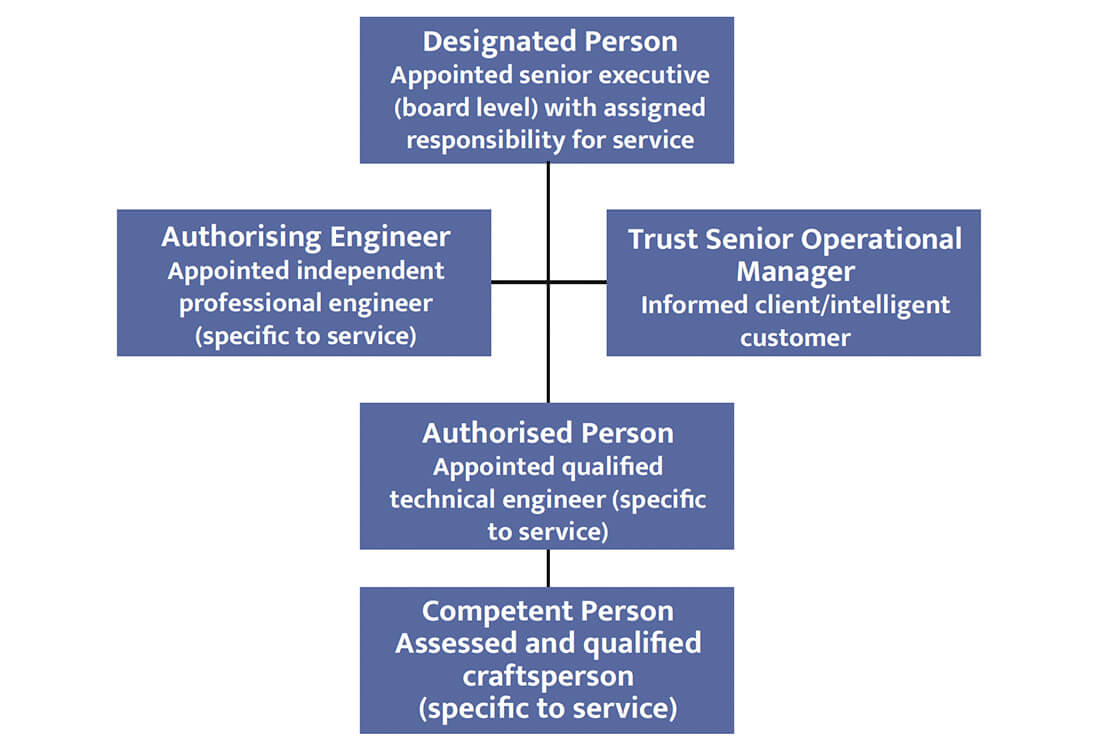
Moving into healthcare, Health Technical Memoranda guidance suggests an entirely different structure should be adopted. The Duty holder is still present but not specifically identified.
The Authorised person in this set up is the individual with operational responsibility for the running of the system/discipline in most cases, which from a water safety perspective can cause issues with governance structures because there is no “Responsible Person” indicated. This creates a conflict with the Approved Code of Practice.
So the question arises, do I need a Responsible Person?
The answer to this is very simple, but not very helpful, yes…. and no.
To understand the nature of that answer we need to look at the ambiguities of these structures and ask ourselves why they are ambiguous in the first place.
There are no specifics given in guidance for the responsibilities of any of these roles in any great detail, and there are no specifics given on the competency requirements for any of the roles either. This stems from the fact that every organisation is different.
All organisations are run slightly differently in terms of management structures, reporting, and elements such as finance. The same can be said for safety management. Each water system is virtually unique, either in its design, or by virtue of its uses, and this changes the risk profile.
Guidance cannot offer the FM industry the exact structure they should adopt or the specific competency requirements for a given role because there are infinite possible configurations.
So do I need a Responsible person?
Yes. Do they have to be called the Responsible person? No.
What matters most when looking at governance structures and how they best suit an organisation are the duties set out specifically to each role in the structure. Working predominantly in healthcare I have seen the inclusion of the responsible person into the HTM 00 structure with the Authorised person removed, and I’ve seen both in the same structure. None of it matters much, providing communication between the identified roles is appropriate and that their duties are clear, bespoke to the organisation/systems, and are proportional to the perceived risk.
Alongside this are the competency requirements for the role of the AP or RP, neither are well described nor can they be, this makes appointing individuals to these roles rather risky in general for the Dutyholder, and it makes gaining assurance rather sketchy.
Enter the role of the Authorising Engineer (AE). Ultimately, this role is one that provides assurance to the organisation that they have the appropriate personnel in the roles identified in that specific management structure via a competency assessment process. AE’s also ensure that effective support is available to bolster that structure and fill in competency gaps that will inevitably be there. The ability of the AE to adequately assess competency is yet another problem, but one to discuss in another article perhaps.
The bespoke and dynamic and conceptual nature of governance structures, competency requirements, and assurance means that a great deal of it is a “best guess”, and requires a Swiss cheese model to appropriately capture all of those dynamic risk elements.
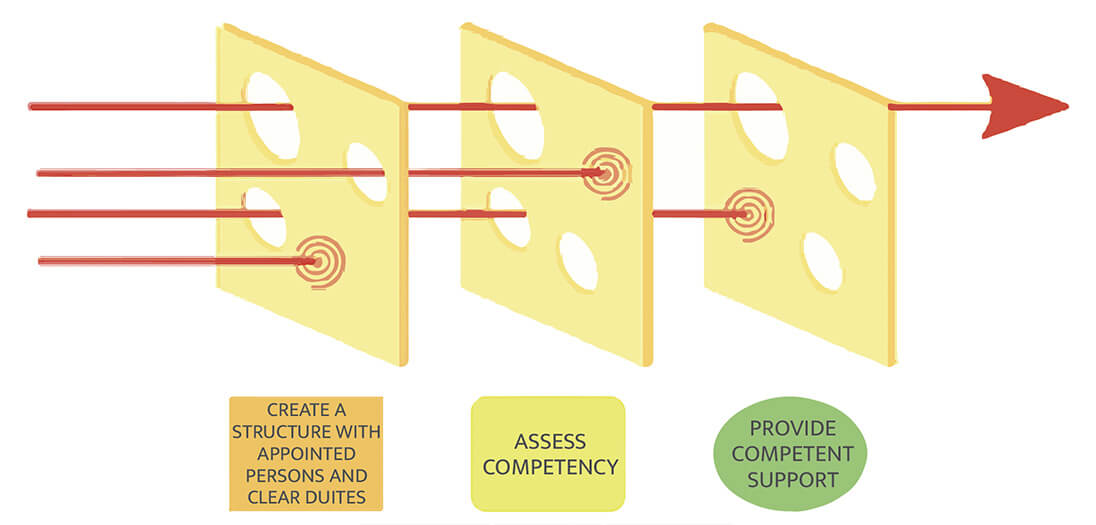
So who can be the AP or RP? In truth, anyone, providing they are competent (ensuring that is a challenge in itself). Industry, over time, has brought forward other considerations that aren’t necessarily requirements, but are quite helpful.
• The position of the individual within the bespoke organisational structure can play a part, this is due to the nature of hierarchical The position of the individual within the bespoke organisational structure can play a part, this is due to the nature of hierarchical management structures, they should ideally occupy a position of relative authority.
• The ability to affect change is one that is commonly discussed when identifying appointed persons, meaning the ability to spend money. Having access to a budget is very helpful to reduce risk as necessary.
The role of the Responsible Person/Authorised Person is predominantly an analytical and technical administration role, meaning that the appointed RP/AP does not have to be an engineer, or have any plumbing experience (although this is often helpful). They do require a level of competency that is defined by the organisation appointing them, knowledge of the risk, the systems installed, and potentially some authority (both organisationally and budgetary).
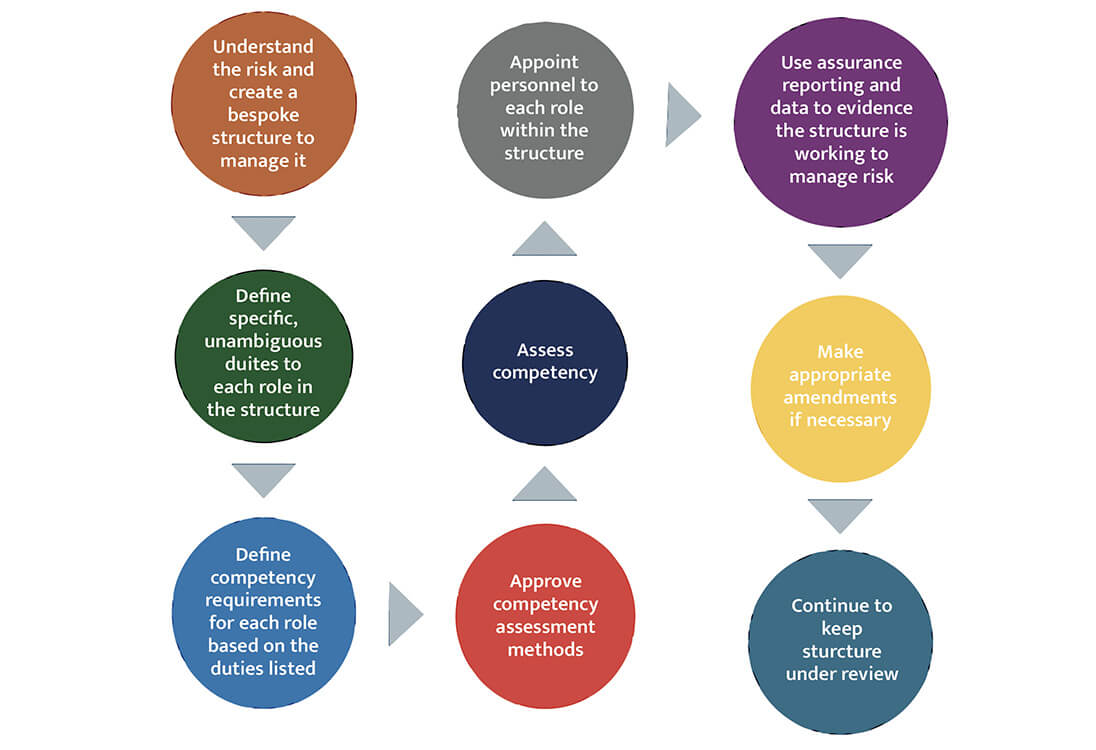
In conclusion, a governance structure is a fluid thing, its layout and general set up are reflections of the way the organisation operates and communicates, you do not need to follow the established appointed role structures within guidance (although it makes sense to in most cases). What means the most when we look at these structures is that each role in the structure has well defined, fully understood duties that are clearly listed, so there is less ambiguity and more clarity on how the risk is managed.