As featured in Waterline Summer 2024

Reducing healthcare acquired infections through new technology
By Jonathan Waggott, Managing Director of Angel Guard
Healthcare-acquired infections (HCAIs) are, as the name implies, infections contracted as a direct result of treatment or being within a healthcare setting at time of contraction. As we are well aware, HCAIs pose a serious risk to patients, staff, and visitors. Fortunately, as a society we are constantly innovating, using previous research and breakthroughs in order to better combat these infections and help save lives. These technologies are helping to make a massive difference in reducing outbreaks due to deadly pathogens like Legionella species and Pseudomonas aeruginosa, improving both end user experience and patient outcomes in the process.
This article will explore and discuss some of the latest technologies which have already or are just starting to make an impact on reducing risks and ultimately saving lives in the process.
Digitising water monitoring
Remote water monitoring is onetechnology already making suchimprovements. The technology itselfhas revolutionised the water monitoringprocess, helping building owners/operators by providing real-time insightsinto water temperatures and usagewithin healthcare buildings, and incertain cases also being able to identifypathogen and biofilm levels. Theseadvancements have not only allowed fora more efficient allocation of resources,(rather than devoting manpower andresources to manual water testing) butthe continuous monitoring of water alsoenables the early detection of issueswithin the water system, whether it bedetection of deadly pathogens or a lackof flow which could potentially lead tostagnant water and dead-legs. Remotewater monitoring provides end userswith the capability to prevent waterborneillnesses before they happen,whilst ensuring that their systems arecompliant within current UK regulations.
In addition, remote monitoring provides healthcare officials with invaluable data insights, helping to support evidencebased decision making, with resources Reducing healthcare acquired infections through new technology being allocated exactly where they need to be. As opposed to manual clipboard recording or often-poor anecdotal evidence for outlet usage which are prone to human error, remote monitoring can analyse usage and trends accurately 24/7. Often reducing the need for manual flushing of all outlets, potentially leading to thousands of litres saved in water alone, in addition to the money saved and operational costs minimised.
Remote water monitoring also allows for rapid response to detected issues, reducing the possibility of disruptions to patient care, typically from relocation due to water issues or pathogen outbreaks. Through receiving instant alerts about the risks of their water, healthcare providers are able to respond quickly and efficiently, putting the relevant safeguards in place such as flushing and cleaning/disinfecting or remedial works such as improving temperature control to ensure patient safety.
Remote water monitoring can help significantly improve patient outcomes by ensuring healthcare facilities have access to accurate and complete data whilst improving overall water management efficiency.
Advances in disinfection
Remote water monitoring is not alone in improving patient outcomes, ascopper/silver ionisation is another such technology disrupting water management within the healthcare sector. Although it has been around for some years now, like many new technologies it has taken a while to become more mainstream. Whilst certainly not the only means of continuous dosing, copper/silver can provide both an effective yet sustainable solution to assist in reducing waterborne pathogens within potable water. The ionisation utilises the antimicrobial properties within copper and silver to help reduce pathogens and other harmful microorganisms present within water systems.
Published as far back as 2001 in ‘Water Research’ [1] research found that ‘even very low concentrations of metal (especially silver) ions can be effective against legionellae everywhere in the water system. Reliable prevention requires efficiency, however, so continuous provision of silver ions at all points in the water system is necessary’. It also found that some pathogens such as ‘Nontuberculous mycobacteria and other heterotrophic bacteria were more tolerant to copper and silver ions than legionellae’. It concluded that a ‘properly maintained copper–silver ionisation method may be a solution to the serious problem of nosocomial legionella pneumonia’.
A laboratory study by Huang et al. in 2008 [2] of copper and silver ions incombination provided evidence to suggest that bactericidal efficiencies are greater than 99.99% against the most significant clinical waterborne microbes; P. aeruginosa, Acinetobacter baumannii Strenotrophomonas Maltophilia and Legionella. This solution can offer a longer lasting and sustainable alternative to some traditional water disinfection methods. Copper/silver ionisation can also provide benefits without introducing harmful chemicals to potable water, ensuring patient safety whilst improving overall water quality.
Water delivery – pipework and fittings
Another recent advancement focuses on how the water itself is being delivered within domestic hot and cold water supplies. Water pipework and fittings have barely changed over the last 60 years with copper pipes still being the favoured choice in healthcare buildings (apart from Scotland that uses stainless steel). In non-healthcare buildings (especially residential properties) we have seen a growth in the use of plastic pipes and fittings, but this change has been more down to cost than any direct water management benefit. Within larger commercial buildings, including healthcare throughout the UK, it is still usual to re-circulate hot water (to keep it hot and flowing throughout the building). But what we haven’t seen until recently was cold water being chilled and re-circulated.
Already common-place in many hotter countries cold water re-circulation is being thought about and now designed into a growing number of UK newbuild projects. Currently, the favoured method of recirculating water is still the traditional two pipe system using a flow pipe and a completely separate return pipe that pumps unused water back to the heat (or cooling) source to bring it back-up (or down) to temperature for sending out again to all of the outlets. This, as you can imagine, is quite energy inefficient as long pipe runs, even those that are well insulated, can lose up to 10 degrees C of heat along the way.
Improving upon this is the invention of a pipe-in-a-pipe recirculation system. This award-winning innovative product places the smaller return pipe within the outgoing flow pipe and has a remarkableeffect on reducing the energy usually lost. By constantly insulating the return water with the newly charged flow water it ensures that there is a temperature equilibrium throughout the entire water system, reducing temperature losses to less than 1 degree C.
This helps to ensure that the water constantly remains compliant within safe temperatures all the way to the outlets. This discourages pathogen and biofilm growth whilst using up to 50 per cent less energy and carbon usage*. Installation time is also halved and as materials are reduced by up to 50 per cent, this also has a major impact on carbon and cost reductions. [*Ref. CIBSE Journal May 2022].
Clinical handwash basin design
Handwashing is a vital and much needed process among healthcare professionals to reduce cross contamination and spread of harmful pathogens leading to healthcare-acquired infections. However, handwash basins themselves can create breeding grounds for bacteria and pathogens to spread. For example, in a recent video made by NHS Scotland to train their staff it highlights the need to reduce splashing and to report any washbasins or sinks that are blocked.
It’s good to see then that in recent times the design of the clinical washbasins has seen major developments focused on reducing these risks and others – helping to keep patients safer.
Materials and overall design
Although the base material that clinical washbasins are made from hasn’t changed much over the years (it is still largely vitreous china) what has changed is the outer coating – the glaze. Several manufacturers now use glazes that create a surface that better enables water to run straight off and also incorporate anti-microbial additives like silver or zinc that helps to reduce pathogen growth in-between cleaning. In addition, washbasin rims have become smaller and thus less easy to place ‘unclean’ objects onto them.
Anti-splash
Thanks to much research over the last few years, it is now generally accepted that washbasins can cause copious amounts of splashing to surrounding areas. This splashing (and associated aerosols) can carry water-borne pathogens along with it, landing onto sterile surfaces, equipment, clinical staff, and patients themselves. This contact and subsequent spread of pathogens has unfortunately led to far too many patients contracting HCAI’s as a result. Fortunately, many washbasins have now been designed with optimised, bowl shapes and angles enabling water to flow whilst minimising unnecessary splashing, lowering the probability and chance for pathogen spread. One particular washbasin has taken this a step further by designing a special inner bowl that reduces splashing even when hands are within the water flow.
Washbasin drains
In a recent article by Harper Water, it states “Multiple studies have identified that handwash basin, sink and shower drains and U-bends play a role in the transmission of healthcare-acquired antibiotic-resistant infections, particularly those caused by Klebsiella spp., Pseudomonas aeruginosa and Escherichia coli.
The niche environment of healthcare drains and U-bends supports biofilm formation and populations, enabling ease of microbial genetic exchange.Where multi-drug resistant infections have been reported, it is prudent for Infection Prevention to delve into these niches as part of an environmental investigation. Often such pathogens are intermittent yet persistent in this environment, leading to outbreaks which can span years.” [www.harperwater.com/investigating-drain-life].
It is a good sign then that some manufacturers are taking this issue on-board and are trying to design-out these issues. Examples include the use of copper siphons and wastepipes to reduce microbial growth and heating elements within a special trap to literally destroy the pathogens through extreme heat.
Improved tap design
Tap spouts provide another risk point for pathogen spread, as often cleaning with the same cloth, touching the outlet with dirty hands or improper design leaves tap spouts as prime suspects for retrograde contamination, considerably increasing the risk of biofilm growth within the tap and subsequently the adjacent pipework and TMV. Furthermore, the angle and position of the tap spout can also encourage splashing.
Fortunately, these issues are being confronted by some tap manufacturers via careful design and testing which are beginning to design these issues out, leading to real innovation and new technology within this important but complex area. For example, one such design has the spout encapsulated inside an outer casing that surrounds it, meaning that the chance of retrograde contamination through cleaning or an end user contacting the spout itself are greatly reduced.
Increase in use of touch-free taps
The introduction of improvements to touch-free sensor taps have marked a significant advancement in not only reducing contact points (thought to be a major cause of cross contamination) within clinical areas but also providing additional benefits such as automated flushing, electronic timing guides for users and usage data capture in addition to improving the overall end user experience.
Further eliminating this risk of crosscontamination through surface contact is vital, as found in a paper published by Otter JA, Yezli S, French GL [3] on how surfaces contribute to the transmission of hospital pathogens, and how removing touch points greatly reduces the risk of pathogen transfer.
One drawback with touch-free taps has been the rubberised plastic parts used within the solenoid valves being found to encourage biofilm production. However recent improvements to the design of sensor taps include the use of safer materials to both activate and mix the water and electronic thermostatic controls has the potential to improve this.
Leak detection
Leaks can be commonplace within large buildings such as hospitals and often lead to large-scale damage and areas of the hospital being out of use for some time.
New digital technologies are now available that can not only detect if a leak occurs but can, through a portal, issue alerts to responsible staff members and sometimes even activate shutoff valves to prevent the leak from continuing.
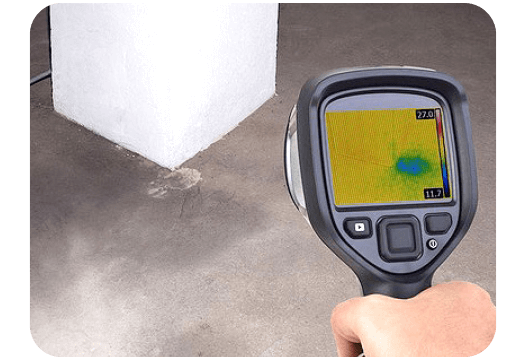
It is estimated that 23% of water pumped into public buildings is lost due to leakage.
Intelligent tracking and portals for water sampling and test results
With the advances we are now seeing in the area of remote water monitoring systems, it would only make sense for us to see an equal amount of advancement with regards to the online aspect of monitoring and tracking of water test results. Available 24/7 from any location in the world these online portals allow end users and clients to effectively track their water monitoring results and in some cases be able to view a risk level for a given location driven by AI technology.
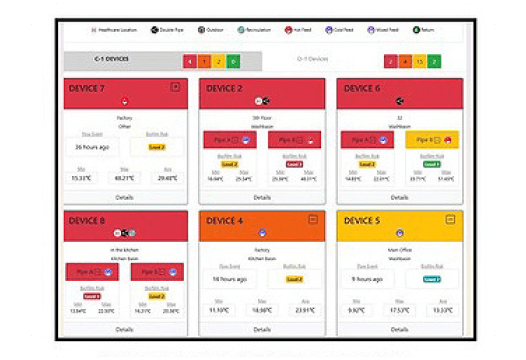
Online portals showing analysed data.
In addition to viewing monitoring results some systems provide water testing results. In both instances the time and money saved through these procedures is incredibly significant, as typically these processes (at present) can span over weeks and sometimes months depending on how accurate they wish the testing to be. Handling these results electronically bypasses a vast amount of paperwork and helps increase the compliance of these facilities whilst making a positive impact on patient outcomes by identifying potential pathogen and biofilm growth in a timely manner. Providing facilities and estates teams with the data needed to carry out safeguarding procedures whilst minimising risk at the same time is one of the most important aspects of these tracking technologies.
Conclusion
No matter how many issues face water at present, manufacturers, designers and experts are always striving to make our world a safer place to live. Implementing ever advancing technologies can help ease the strain placed upon healthcare facilities and encouraging innovation, and helping to integrate new technologies within these buildings can improve patient outcomes. As we approach uncertain times with worries of antibiotic resistant bacteria and HCAIs looming over the healthcare sector, it is crucial that we all encourage the trial and use of new and innovative technologies – embracing rather than resisting them.
So, what for the future? Well, this is always hard to predict, but here are a few things that we might see more of in the coming years; nano technology to improve filtration, new innovative materials such as polymers that resist pathogen and biofilm growth even when submerged in water, and increases in the use of AI to analyse data and predict risk levels. As the risk of transmission of pathogens is often at point of use of water delivery, it is also highly likely that we will continue to see much smarter taps and showers being developed and launched. What I can safely say is that the water management industry is full of passionate and innovative people determined to make the future of water safer.
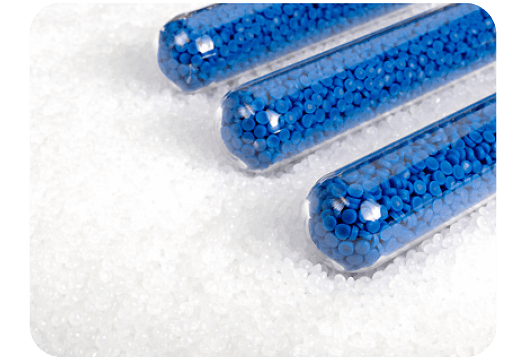
Anti-microbial polymers

Article by Jonathan Waggott,
Managing Director of Angel Guard.
References
[1] Water Research Volume 35, Issue 17, December 2001, Pages 4217-4225, Jaana Kusnetsov 1, Eila Iivanainen 1, Nina Elomaa 2, Outi Zacheus 1, Pertti J. Martikainen 3
[2] Water Research Volume 42, Jan 2008, Pages 73-80, Huang et al.
[3] Infection Control Hospital Epidemiol, July 2011, Pages 687-99