Understanding the Role of Magnetite Oxidation Layers in Heat Exchangers

Published on 17/10/2025 | by Waterline Admin

As featured in Waterline Autumn 2025

Understanding the Role of Magnetite Oxidation Layers in Heat Exchangers

By Randall Stremmel, Brixx Technology

Insights for Inspectors, Engineers, and Materials Professionals
In the high-pressure, high-temperature world of industrial heat exchangers, corrosion and oxidation are constant threats. However, not all oxide layers are detrimental. One such layer—created from magnetite (Fe₃O₄)—can enhance the performance and durability of a heat exchanger when formed under proper conditions.

What Is a Magnetite Oxidation Layer?
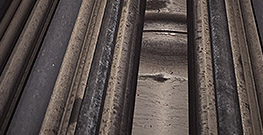
Magnetite is a naturally occurring iron oxide that can form on the interior surfaces of steel components, including heat exchangers. Under the high temperatures and pressures typical of these systems, oxygen diffuses into the metal surface and reacts with iron atoms to create a dense, adherent layer of magnetite. This process, although it may seem counterintuitive in corrosion control, can offer important advantages.

Protective Properties of the Magnetite Layer
The magnetite layer functions as a passive barrier, protecting the underlying metal from further oxidation and corrosion. Unlike flaky, porous rust (Fe₂O₃), magnetite creates a tight, protective film that slows the diffusion of corrosive substances like oxygen and moisture. This passive layer stabilizes the metal surface and increases the equipment’s service life.

Enhancing Thermal Efficiency
Beyond corrosion resistance, the magnetite layer may also enhance thermal conductivity. Compared to many other corrosion products, magnetite shows relatively high thermal conductivity, which can lower the overall thermal resistance between the heat exchanger wall and the working fluid. This is especially beneficial in systems where efficient heat transfer is vital for energy performance.

Risks and Preventive Measures
While magnetite formation can be beneficial, uncontrolled or excessive oxidation can cause scaling, flow blockages, or under-deposit corrosion. Therefore, the goal is not necessarily to eliminate magnetite formation, but to control it.

Strategies to control magnetite layer formation include:
• Material Selection: Use alloys resistant to oxidation and corrosion under the specific process conditions.

• System Design and Operation: Maintain optimal temperature, pressure, and flow conditions to minimize thermal and chemical stresses on the metal surface.

• Chemical Water Treatment: Apply corrosion inhibitors and oxygen scavengers to control oxidation kinetics and stabilize protective oxide layers.

• Regular Maintenance: Implement inspection schedules, chemical cleaning, and nondestructive evaluations (NDE) to monitor oxide layer growth and detect early signs of corrosion or fouling.

Final Thoughts
The magnetite oxidation layer showcases a compelling intersection of materials science, thermodynamics, and corrosion engineering. For professionals responsible for inspecting, designing, or maintaining heat exchangers, understanding why and how this layer forms—and how to control it—can lead to safer, more efficient, and longerlasting systems.

Summary
Did you know that a thin layer of magnetite can protect and even boost your heat exchanger’s performance?

In high-temperature systems, oxidation is often viewed as the enemy—but under the right conditions, a magnetite (Fe₃O₄) layer forms a durable, thermal-conductive barrier that resists further corrosion. In this article, we explain how this layer forms, its dual role in protection and heat transfer, and what engineers, inspectors, and material scientists need to know to manage it effectively. Explore the science behind one of the industry’s most misunderstood surface phenomena.


Product & Service Spotlight

Effective water management requires data, not assumptions.

INFORM provides total visibility and real-time alerts to stay ahead of risks. Replace guesswork with audit-ready evidence for effortless compliance. Our smart, configurable alarms act as a proactive safety net, while trend analysis identifies your highest-performing areas. Prioritise maintenance and maximise resource efficiency through one intuitive dashboard. INFORM delivers the clarity needed to maintain rigorous safety and operational standards across your entire water system.

How the SolidTek® Biocide Feeder Package will BENEFIT YOU

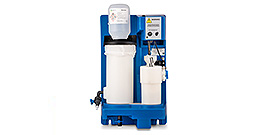
SolidTek's® Biocide Feeder Package offers users a functional, safe, compact and environmentally-friendly alternative to traditional brominators.

Designed for use with SolidTek’s® enhanced bromine biocide, BromTek, it offers multiple benefits:

SAFER
Reduced exposure to fumes and bromine dust (non-pressurised system).

EFFECTIVE
Use with field proven mixed hydantoin biocide - better performance than standard bromine tablets.

COMPACT
Wall mounted reducing footprint of installation.

QUICK & EASY
Charge with product in under 5 minutes without isolation from the system.
SUPPORT

Product calculators and tech support available.

LIA International

Providing water testing equipment and reagents for water treatment and hygiene professionals.

Tailored Service - Fast Delivery - Technical Support

Contact us to find out more.

Email: [email protected]
Phone: +44 (0)1488 686777
Web: www.liainternational.co.uk

Managing Risk at the Water System Interface

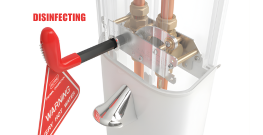
Using system hot water (❯60 °C), Horne’s patented ILTDU delivers targeted thermal disinfection at the water system periphery, where potable water meets a non-sterile (ward) environment. Combined with elevated velocity flushing, which mechanically shears and removes excess bulk biofilm, it addresses both established pipework biofilm, and contamination driven by retrograde ingress. This approach avoids selective pressures associated with chemical dosing, supporting control of Pseudomonas aeruginosa, NTM and other waterborne organisms while protecting system integrity, water quality and lowering environmental impact.

Result of using Erythorbate

To scavenge or to passivate has long been the question when controlling oxygen-induced corrosion in feed lines and steam raining equipment.
Here’s a short introduction to a product that allows you to do both: Sodium Erythorbate. It’s an oxygen scavenger and passivator utilising residual dissolved oxygen in the metal passivation reactions. Erythorbate and its degradation products continue to remove oxygen with an eventual residual of water and carbon dioxide hence not adding to the boiler water solids reducing Blowdown.

PIB Insurance Brokers

As a business in the Legionella Control Industry, are you confident that your insurance gives you the protection that you need? Have you ever been charged a higher premium on the pretext that the correct insurance cover should cost you more?

If these concerns sound familiar, your business may not be benefitting from the best value, security and advice. This is why PIB has developed an exclusive package which, combines all the benefits that you require for your business protection.

FILT’RAY Compact Range

AQUATOOLS has launched a range of filters for hospitals. FILT'RAY Compact filters provide a physical barrier to reduce the risk of infection from waterborne microorganisms. Tubular membrane microfiltration with a high filtration capacity delivers bacteriologically controlled water, securing the point-of-use for up to 4 months. They are compact to save space, ideal for taps with a low drop height. Retro-contamination is carefully controlled thanks to a protective skirt and a tilted connector which allows the filter position to be optimised.

TME Thermometers

Take your ACoPL8 testing to the next level with TME. Faster, smarter, stronger than the rest.

CLEGK2 – An unbeatable legionella kit with everything you need: a robust thermometer with inbuilt timer, fast-response dual surface/immersion probe, and a handy carry pouch.

New thermometers and thermometer kits include a FREE UKAS traceable calibration certificate.

TCWAllPort – A unique low-cost solution for concealed TMVs: a compact thermocouple socket for remote access temperature monitoring.

MM7000-2D – the smart way to go paperless. Our relaunched Bluetooth Barcode Thermometer is now more affordable than ever before.

Visit our website for our best deals and new offers or contact our friendly sales team direct.

www.tmethermometers.com

[email protected]

01903 700651

Introducing the MD150: Precision & Speed for Industrial Water Testing

Key Features:

• Reliable & Accurate – Delivers precise, consistent measurements.

• User-Friendly Design – Intuitive interface with simple operation.

• Pre-Programmed Test Methods – Covers key industrial water parameters.

• Waterproof & Durable – Built for tough industrial environments.

• High-Quality Optics – Ensures superior measurement accuracy.

• Versatile Applications – Ideal for cooling towers, boilers, and wastewater monitoring.

• Rapid Measurement – Results within seconds without compromising accuracy.

Perfect for professionals needing a dependable, high-performance photometer for industrial water analysis.

www.dtkwater.com
01604 686995