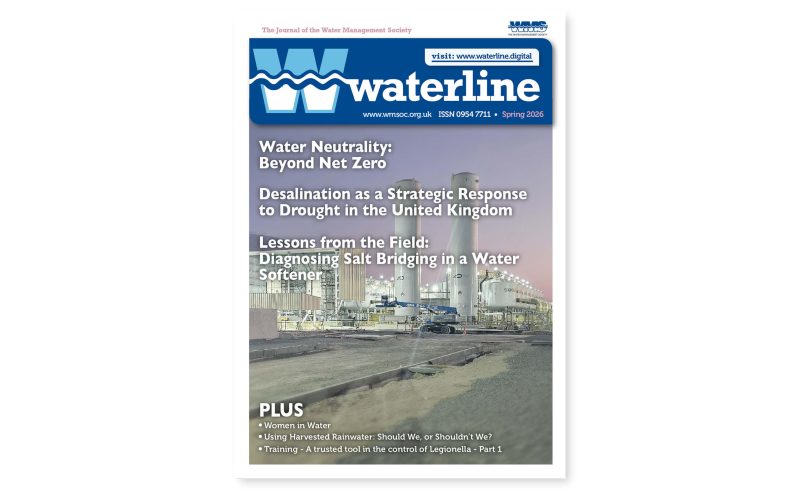
As featured in Waterline Spring 2026
Water Neutrality:
Beyond Net Zero
Adam Griffith, TECS Group, Managing Director
In the corporate sustainability hierarchy, “Net Zero” has long held the throne. Carbon footprints are measured, mitigated, and marketed with clinical precision. Yet a silent crisis is emerging that threatens the very infrastructure these carbon goals sit upon, water scarcity. For the water treatment and hygiene sector, the conversation is shifting from simple efficiency to the more rigorous standard of Water Neutrality.
The UK is often perceived as a rain-soaked nation, yet we are hurtling toward what Sir James Bevan, former Chief Executive of the Environment Agency, termed the “jaws of death.” Within 20 to 25 years, England faces a public water supply shortfall of 5 billion litres per day.
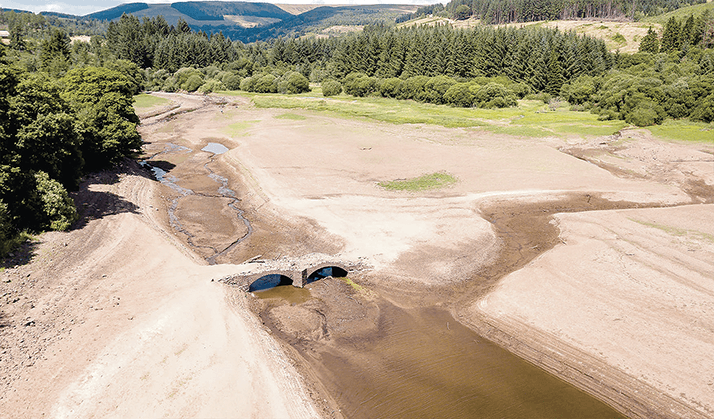
For facilities managers and water treatment specialists, this is a fundamental threat to operational resilience. Critical systems, cooling towers, steam boilers, and domestic hygiene services are predicated on the assumption of a continuous, high-quality supply. However, the Met Office has noted that while winters may be wetter, summer rainfall is decreasing, and by late 2025, reservoir levels in East England were already much lower than average at just 67%.
As of April 1st, 2025, national average water bills rose by 26%. Some regions, such as the Southern Water area, saw increases as high as 47-50%. Under the Environment Act 2021, the government has set a legally binding target to reduce nonhousehold (business) water use by 9% by 2038, with a trajectory toward a 15% reduction by 2050.
Defining Water Neutrality
Water Neutrality means that for every new development or operational expansion, the total demand on the local water authority remains the same after the project as it was before. It is a localised commitment that follows a strict hierarchy:
1. Using Less Water: Implementing ultra-low-flow fixtures and high-efficiency treatment processes (e.g., adiabatic in place of cooling towers).
2. Recycling Water: Replacing “wholesome” (potable) water with non-potable sources, such as rainwater harvesting or water recycling.
3. Offsetting: Investing in water-saving schemes within the same local catchment area to balance any remaining demand.
The path to neutrality is shared, but the technical heavy lifting falls typically to the service provider. While Step 3 (Offsetting) often lies with the Duty Holder, involving external investments and catchment-level strategies to balance water usage, the first two steps of the hierarchy are where treatment and hygiene companies exert their greatest influence. Our impact is dual pronged:
1. Demand Reduction (Using Less): This is no longer just about fixing leaks or removing dead legs. It is about the technical optimisation of existing systems. By utilising advanced chemistry and real-time monitoring, we can safely push concentration cycles in cooling towers or implement high-efficiency boiler water treatments that drastically reduce the frequency of blowdown. It is the art of squeezing every drop of utility out of every litre of mains supply.
2. Resource Creation (Water Re-use): This is the “new frontier” for our sector. By designing and maintaining onsite recycling systems, such as cooling tower bleed recovery or wash-water recycling, we are effectively “creating” a new water source for the building. By treating rainwater to a high standard for cooling towers and process, and combining it with recovered process water, we significantly reduce reliance on local water supplies and move the site toward a self-sustaining neutral footing.
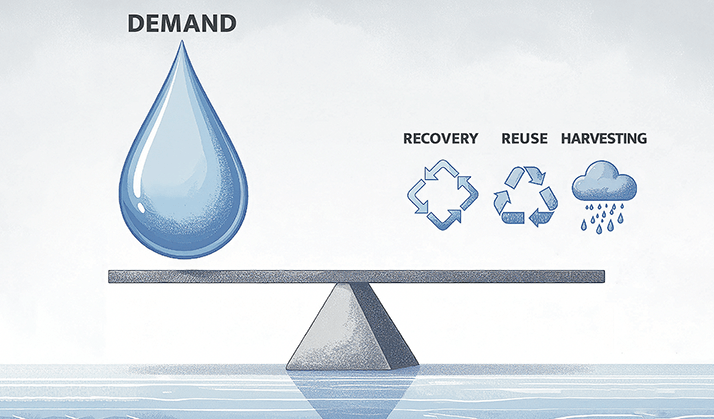
Achieving water neutrality is a complex balancing act for modern organisations. On one side of the scale, they must reduce raw water demand; on the other, they must increase the volume of “created” water through recovery and reuse.
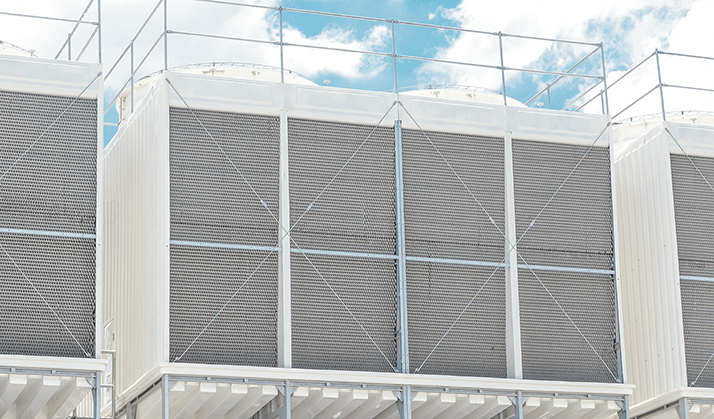
However, this pursuit of neutrality can present a technical paradox, while these strategies improve network resilience and sustainability, they can simultaneously introduce new operational risks. Optimising a system for lower consumption often alters its chemical and microbiological profile, requiring a more sophisticated approach to ensure that saving water doesn’t inadvertently compromise system safety or asset integrity.
The Water Hygiene Impact
In the accelerating move toward water neutrality, there is a dangerous temptation; the urge to prioritise the tap over the pipe. For a Duty Holder or Facilities Manager under pressure to meet environmental targets, the path of least resistance is often a quick fix. It is remarkably easy to demonstrate a reduction in consumption through the rapid deployment of water-saving fittings, low-flow showerheads, infrared “smart” taps, and dry urinals or by simply decommissioning a percentage of outlets in a low-occupancy wing.
However, from a water hygiene perspective, this reactive approach is fraught with hidden dangers. By slowing the water to save the resource, we inadvertently increase the microbiological risk to public health. We are essentially trying to run a modern sustainability agenda through infrastructure that was designed for a different era of high-volume throughput. When these two philosophies clash, the result is often a system that is efficient on paper but hazardous in practice.
The Engineering Mismatch
Most UK building services and internal pipework diameters were designed using traditional loading units that assume specific, high-volume flow rates and frequent usage. While our plumbing isn’t necessarily ancient, the design margins were built around a plentiful supply. When we arbitrarily reduce the volume of water passing through these pipes without reengineering the actual infrastructure, we don’t just save water; we fundamentally alter the system’s hydraulics.
This creates a series of cascading failures in the building’s water system:
• Increased Water Residency (Stagnation): Removing taps or installing ultra-low-flow restrictors leads to significantly increased water residency time. Water that was intended to move through the building in hours may now sit for days. Stagnant water quickly loses any residual disinfectant, such as chlorine, leaving the system defenceless. Furthermore, it allows temperatures to drift out of the safe cold (below 20C) or hot (above 50C) zones and into the 20C to 45C danger zone where bacteria thrive.
• The Loss of “Scouring” Velocity: Lower flow velocities reduce the natural scouring effect that occurs when water moves briskly through a pipe. This physical friction is essential; without it, complex biofilms begin to consolidate on the internal surfaces of pipework & fittings. These biofilms act as a safe-haven for Legionella pneumophila, Pseudomonas aeruginosa & other waterborne pathogens, shielding them from chemical treatments and thermal spikes. Once biofilms establish themselves within a water system, it can be incredibly difficult to regain control.
Despite years of industry training and the availability of clear guidance within ACoP L8 and HSG274, the dead leg remains one of the most common recommendations in modern Legionella Risk Assessments. It is a testament to the fact that, in the rush to refurbish or save water, the pipework behind the wall is often forgotten. Simply turning off or removing a tap without professionally stripping back the associated pipework to the localised header creates a stagnant reservoir. Because they are still connected to the live system, they periodically seed the rest of the building’s wholesome water supply with high concentrations of bacteria every time there is a pressure fluctuation or a nearby tap is opened. If we are serious about water neutrality, we must be equally serious about the physical removal of redundant pipework, not just the “capping” of visible outlets.
Water neutrality and water hygiene are not opposing forces; they are two sides of the same coin of operational resilience. True sustainability is not found in systems that have been haphazardly pruned, but in those that are correctly sized for their current occupancy.
If a building’s occupancy has dropped, the answer isn’t just to turn off half the taps. That approach leaves the remaining system oversized and sluggish. Instead, a holistic remedial strategy might involve re-piping to reduce pipe diameters or implementing automated flushing regimes.
While low-use outlet flushing is often seen as wasting water, it is a vital tool for risk management. In a smart building, this isn’t done blindly; it is managed via sensors that only flush when a specific temperature or water age threshold is reached. This ensures that every litre used is a deliberate investment in safety, rather than a mindless drain on the resource.
By considering the building as a living, interconnected organism, Duty Holders can achieve the legally binding 2038 reduction targets without inviting microbiological risks into their own pipework. We must move beyond the vanity of the low-flow fixture and look at the complete system. Our goal should be a system that is lean and efficient, but never stagnant. In our rush to save every drop, we must ensure we do not sacrifice the safety of the people drinking, washing, and breathing in the environments we manage.
Evaporative Cooling Systems
As the UK cements its position as Europe’s primary data hub, we are witnessing a significant shift in how we keep the data of the country cool. Projections for 2026 indicate that the UK’s data centre cooling market is expanding at a compound annual growth rate (CAGR) of over 10.9%, driven largely by the heat loads of Generative AI and high-density computing. To manage this, the industry is leaning heavily on evaporative and adiabatic cooling, systems that offer superior energy efficiency compared to traditional air-cooled chillers but come with a heavy water cost.
For a data centre operator in 2026, this creates a profound dilemma. They are caught in a technical balancing act between reducing absolute water consumption and meeting the rigid standards of Water Neutrality. The future looks bright for new builds that can be engineered from the ground up for Direct-to-Chip (D2C) liquid cooling, designed to operate at much higher temperatures, but it is looking increasingly bleak for data centres currently under construction or recently completed. Most of these facilities were designed for a transition that hasn’t quite caught up with the ever-evolving technology.
In a traditional engineering mindset, the goal is efficiency. To reduce the raw water intake of a cooling system, an effective tool is a Reverse Osmosis (RO) plant installed on the incoming mains supply. By stripping the raw water of minerals before it ever reaches the cooling tower, we can safely push the Cycles of Concentration (CoC) much higher with effective water treatment chemistries. This allows the system to reuse the same water for more cycles before it becomes too mineral heavy and requires bleeding.
However, from a Water Neutrality perspective, RO on the front end presents a problem, it doesn’t “create” water. It merely makes the incoming supply more efficient. Under the strict three-step hierarchy of neutrality, “Step 2: Resource Creation” carries more weight than simple efficiency. This is forcing a shift away from front-end RO toward a more complex approach, Bleed Recovery Systems.
Bleed recovery involves taking the highly concentrated, mineral-rich waste water from the cooling tower’s blowdown and treating it for reuse. While front-end RO is cleaner and easier to manage, neutrality targets incentivise operators to capture their waste stream to prove they are creating a new internal supply.
By opting for bleed recovery, data centres can effectively tip the balance in favour of neutrality. They aren’t just using less; they are creating a loop. However, this comes with a warning, these recycled streams require much more vigilant monitoring and real-time chemical control. If the recycling equipment fails, the water system can quickly become a scaling or biological liability.
As we head toward the 5 billion litre daily shortfall predicted for the 2040s, optimal can be redefined. In the evaporative cooling world of 2026, a system is only as good as its ability to sustain itself. Water neutrality is driving us to become water creators, transforming what was once a waste product into the lifeblood of the facility. It is a more difficult path, but it is one way to ensure the UK’s digital growth doesn’t run dry.
Rainwater Harvesting
For decades, rainwater harvesting was the preserve of green flagship projects, a visible, if somewhat decorative, mark of an organisation’s commitment to the environment. These systems were almost exclusively siloed into grey-water applications, collecting roof run-off, passing it through a basic particulate filter and a UV steriliser, and using it to flush toilets or water the gardens. It was a low-risk, low-reward strategy that barely scratched the surface of a building’s total water demand.
But as we move towards uncertainty in national water supply, the conversation is shifting. Rainwater harvesting is no longer a luxury; it is becoming an important strategic pillar. The goal has moved from simple substitution to resource management, transforming raw precipitation into higher-grade process water that can feed the critical systems in a facility.
The question isn’t whether we can refine rainwater into a higher quality, the technology to do so has existed for a generation. The question is whether the economics and the drive for neutrality finally justify the leap.
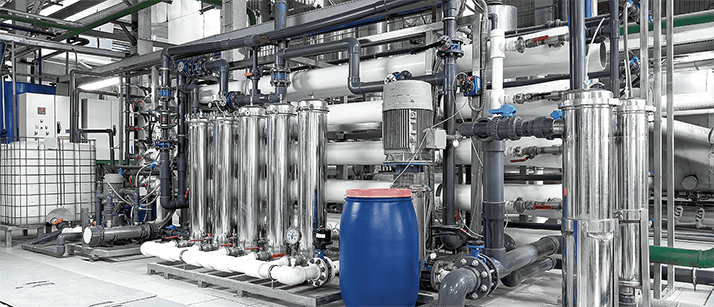
By moving beyond the basic filter-and-flush model toward polished supplies through integrating advanced membrane technology, such as Ultra-filtration (UF) and Reverse Osmosis (RO), we can take rainwater and strip it of the dissolved solids, atmospheric pollutants, and microbiological loads that historically made it unfit for industrial use.
However, if you look at this through a purely financial lens, the argument can still be a difficult one to win. The capital expenditure required for high-end membrane technology, combined with the ongoing chemical and energy costs, often outweighs the cost of simply buying raw mains water, even with the recent 26-50% price hikes.
But focusing on the immediate Return on Investment misses the point of Water Neutrality. Investing in polished rainwater harvesting is not necessarily about saving money today; it is about future-proofing water supply options. As local authorities begin to restrict new connections and the Environment Act 2021 targets start to be felt, the ability to create your own highspec water source becomes an invaluable asset for operational resilience.
Historically, water treatment specialists have been wary of feeding rainwater into cooling towers or process systems. Rainwater is naturally very soft and slightly acidic, making it highly aggressive toward metallic assets. Furthermore, the microbiological risks, ranging from bird droppings on roofs to stagnant storage tanks, presented a significant barrier.
To bridge this gap, the modern rainwater harvesting suite must go beyond a simple UV lamp. We are now seeing the integration of:
• Advanced pre-filtration to handle the unpredictable surge of a downpour which can carry high levels of organic debris that would foul membranes
• Continuous online monitoring to real-time water parameters, ensuring the water entering the system is correctly treated.
We are entering an era where we must view every square metre of a building’s footprint as a catchment area. The shift from grey water to treated water is a logical step in the hierarchy of neutrality. It requires a more complex, more expensive, and more technically demanding treatment regime, but it transforms a building from a passive consumer into an active, self-sustaining participant in the water cycle. In the race toward 2038, the organisations that win will be those that stopped seeing rain as a drainage problem and started seeing it as a primary supply option.
Conclusion: The strategic shift to Water Neutrality
The move toward Water Neutrality marks a fundamental change in UK corporate sustainability. With a projected shortfall of 5 billion litres per day, water scarcity is no longer a distant warning but a looming operational reality that threatens the infrastructure our carbon goals sit upon. Relying on quick-fix solutions, like arbitrarily capping outlets or installing low-flow fixtures, often backfires. These reactive moves create stagnant dead legs and hazardous biofilms that compromise public health and system integrity.
True resilience requires a holistic engineering approach where systems are correctly sized for actual occupancy and protected by intelligent, sensor-driven hygiene regimes. In the industrial and data centre sectors, meeting the heat loads of next-generation AI requires moving beyond simple efficiency toward active resource creation. Whether through complex bleed recovery in cooling towers or the sophisticated polishing of rainwater, organisations must now act as water producers. While the capital costs for membrane technologies are significant, they are the necessary price of future-proofing our supply. To meet the 2038 targets, we must stop treating water as a cheap, infinite commodity and manage it as the critical, finite lifeblood of our infrastructure.