As featured in Waterline Spring 2026
WOMEN in WATER
International Women’s Day falls on the 8th March each year with a goal of forging gender equality throughout society. The theme of this year’s campaign is ‘Give To Gain’, focused on encouraging a mindset of generosity and collaboration and emphasising the power of reciprocity and support. When people, organisations and communities give generously, opportunities and support for all increase. Knowledge, resources, visibility, advocacy, education & training, time and mentoring all contribute to women’s advancement and help create a more supportive and interconnected industry.
Membership of the Water Management Society is open to all, however there is still a vast difference in the number of male and female members. Council is making strides to increase representation from both genders but still remains a 2 thirds male to 1 third female split. However, we do feel that all those elected to Council have an equal voice within Council and committee meetings. With both our current chair and vice chair roles being held by women we hope that others can see just how far females can rise within the organisation, and we are actively encouraging all professionals to join us on our journey.
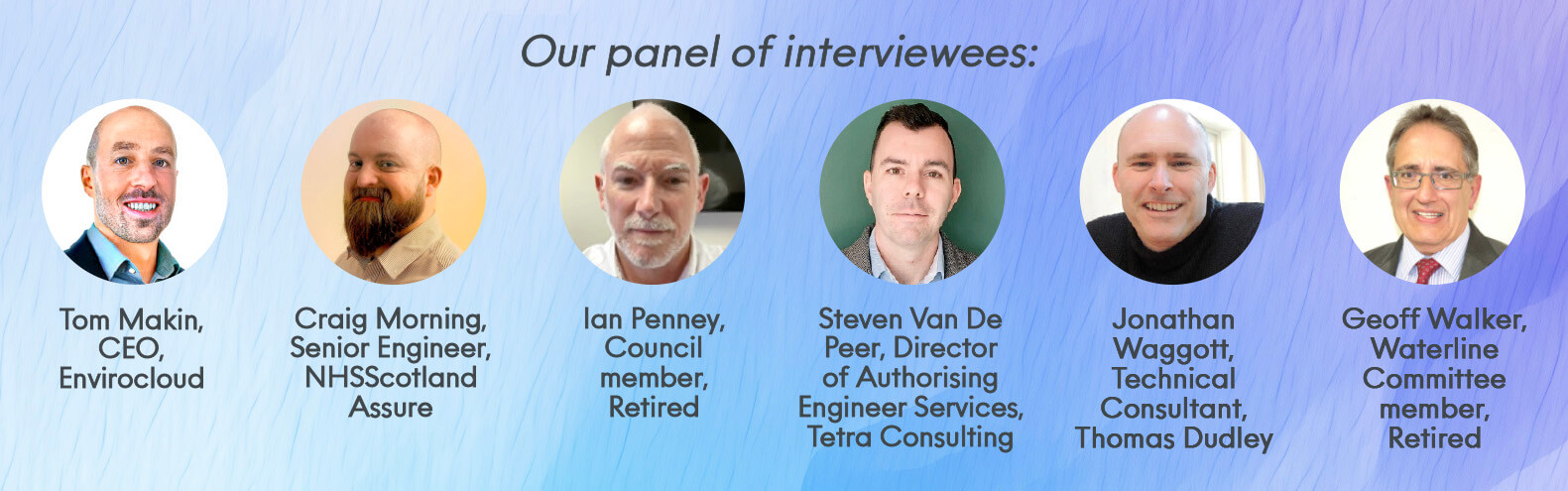
In past years we have put the spotlight on female members of the Society in Waterline. However, in 2026 we would like to take a different look at this and get the views of males within the industry, how they view the contributions from females and what they think we can all do differently to balance the scales. What will you Give To Gain gender equality?
Our first question: Why do you think the industry attracts less women?
Geoff – I can only comment on chemical treatment and monitoring (scale, corrosion, fouling and legionella) in boilers and cooling systems, not healthcare. This ‘traditional’ water treatment marketplace is changing with the deployment of remote monitoring systems but is not attracting huge numbers of applicants. Friends working for my old employer (I’m retired) say that those who are recruited, male or female, are not necessarily staying long-term in a job where pay rates and employment conditions are actually very good. In my day, women accounted for <5% of the field force; now this is closer to 15% with a 30% target by the end of the decade. Interestingly there is a target of 50% women in senior management in the same time period.
Steven – I don’t think this is isolated to the water hygiene / water treatment industries, this is a much more holistic issue across multiple technical / engineering based sectors. The reasons are plentiful and actually quite complex ranging from the availability of opportunities offered to females through to social expectations and social marketing at a grand scale.
Jonathan – I agree and think there are a number of reasons. It’s still seen as male dominated by outsiders entering the industry. It falls under the STEM engineering category where only 17% of the workforce are female and early social conditioning (from a young age boys and girls are subtly steered in different directions. Boys are more often encouraged toward building, problem-solving, and technical type toys; girls toward caring and creative roles), by the time subject choices matter, many girls have already internalised the idea that STEM “isn’t for them.” Couple that with a lack of visible role models, if you don’t see people like you in a role, it’s harder to imagine yourself there. Fewer women in senior STEM positions means fewer examples for girls and young women to point to and say, “I could do that.”
Craig – It may also be that awareness of what types of roles are available in the water hygiene / water treatment industries is not well understood. I had no idea what it was until a friend was employed within the industry and encouraged me to join him. Historically it could be linked to lower numbers in STEM courses in universities and colleges where these types of roles would be advertised as Jonathan mentioned.
Ian– I think a lot of why the industry attracts less women can be traced back to the ‘history’ of the industry… in that the industry grew up with mostly men which would likely have been a wrongly perceived barrier to a woman wanting to get a start in industrial water treatment. It takes a strong woman to join any ‘field’ that is dominated by men.
Tom – Industries with transferable skill sets such as Infection Control and Microbiology have much larger female populations and are thriving. I agree that it may have something to do with the engineering aspect. Many engineering disciplines seem to still be heavily male dominated, and from my experience, can be toxic and sexist environments. Our industry is definitely improving, which is something I’m pleased to say, and despite their lack of numbers, women make up a significant proportion of the most incredible professionals that I have had the pleasure to work with.
So next we asked: What could be done to attract more women to the industry? Ian – The water treatment industry isn’t for everyone, male or female. It’s never been considered a ‘calling’ like some career roles … but as we all know it is an essential industry that touches every area of our everyday life. I’ve seen the number of women in this industry grow year on year during my 40+ working years and I believe the numbers will continue to grow especially when global warming and water scarcity continue to be worldwide concerns. I also believe our schools across all age levels have improved their curriculums to reduce stereotyping which will continue to improve the numbers of women in the industry.
Craig – Earlier introduction (high school level potentially) to what goes on within the industry and what apprenticeship opportunities exist that they may want to pursue would be beneficial. Having someone who has worked in the industry describe the additional benefits of working across wide parts of the country and at various different types of businesses rather being in a single workplace every day may sway some who like the appeal of being on the road more.
Jonathan – I absolutely agree, promoting the job roles more at School, Colleges and Universities, maybe attending to give talks. Attending job and careers fairs promoting the benefits of being in the industry to both males and females is the best way to raise understanding about this career path.
Steven – I actually don’t think there are many easy answers to this question because our industry is unlikely to be in a place to affect large scale social issues. However, what can be done is creating equity within the working environment / working conditions that accounts for social differences between males and females. And as the others have said providing awareness of our industry and routes into the industry at early stages in education that are equally accessible to females and males alike.
Geoff – I graduated in Chemical Engineering and astonished my lecturers by ignoring the oil industry and joining the water treatment market. I never regretted this decision. I have had a fulfilling career. However, the world of water, as a career is moving strongly towards the health sector, and is attracting significant interest, and already employing many ladies.
Tom – It’s a great industry with incredible opportunities for anyone, male or female, who wants to actually make a difference to vulnerable people’s lives. The industry, like many others, has a way to go yet in terms of selfhealing, getting with the times, and eroding away at the dregs of toxic masculinity. It’ll take strong men and women already entrenched in the industry to do that.
With some great females already in the water industry we asked the question: Who is your greatest female role model and why? Steven – My greatest female role model would be my 10 year old daughter, she consistently surprises me with her realism, the undeniability of her logic, and her dreams. My daughter teaches me more about myself and forces me to learn how to change for the better more than anyone else I know.
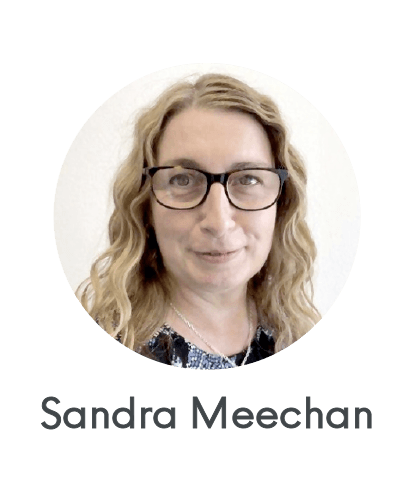
Craig – During my time at ChemTech Consultancy Ltd I was fortunate enough to work alongside Sandra Meechan (nee O’Shaughnessy) who had a real passion for developing processes and acceptable standards of performance within the company. We worked together to make service improvements and ensure consistency across the staff on what was being undertaken. Sandra would challenge perceived norms and ensure that correct technical training was completed by all staff with continual reviews into the use of language in our RAMS and reports to ensure that the paying clients understood what they were getting and what was completed. Sandra accomplished great things by asking the right questions and working with the team to make changes to the benefit of everyone.
Jonathan – My wife, Elaine Waggott, is my greatest female role model. She shows every day that it’s possible to be a strong and effective leader, build a technically driven career, and still be an incredible mother to all of our children—both biological and foster—while also being a loving and supportive wife.
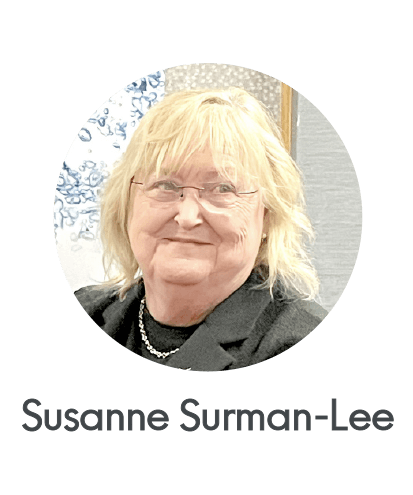
Tom – The obvious answer here is Sue Makin (my mum). She is a successful medical microbiologist and met my dad at the Royal Liverpool Hospital. She (and my dad) raised three very energetic kids and was hands down the best mum anyone could have wished for navigating life all while carving a successful career. She showed me that empathy, beauty, and kindness can also be hardworking and tough when it needs to be. I owe so much to her, however, no discussion about women in our industry would be complete without also mentioning Susanne Surman-Lee who should need no introduction here.
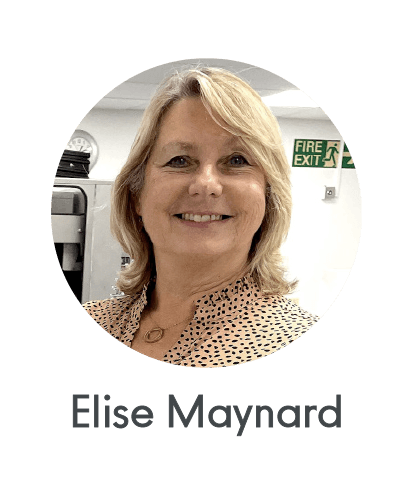
Geoff – It has to be Elise Maynard. I didn’t know her before I became LCA chair in 2008, first meeting her at the then Fazeley HQ. She introduced me to WMSoc. Elise provides independent consultancy to the water and medical devices industries. She has served as chair of the Water Management Society and was awarded fellowship in recognition of her services to both the WMSoc and the industry. She will support anyone in need of help, including me when I was Chair of Training and then Chair of Waterline. She still lends a hand now that I’m just a lowly word-script. Elise is now a Director of WMSoc, sits on numerous BSI committees, is a fellow and active member of a number of other societies (Institute of Biomedical Sciences, Institute of Healthcare Engineering and Estate Management, Royal Society of Public Health, Healthcare Infection Society, Central Sterilising Club, Worshipful Company of Plumbers), and actively contributes to all WMSoc committees. Where does she find the time?